Tuesday, September 27, 2016

Jade P. Post 6

Nastia Cloutier-Ignatiev
Lovers_01Lovers_02Lovers_06Lovers_04Lovers_07

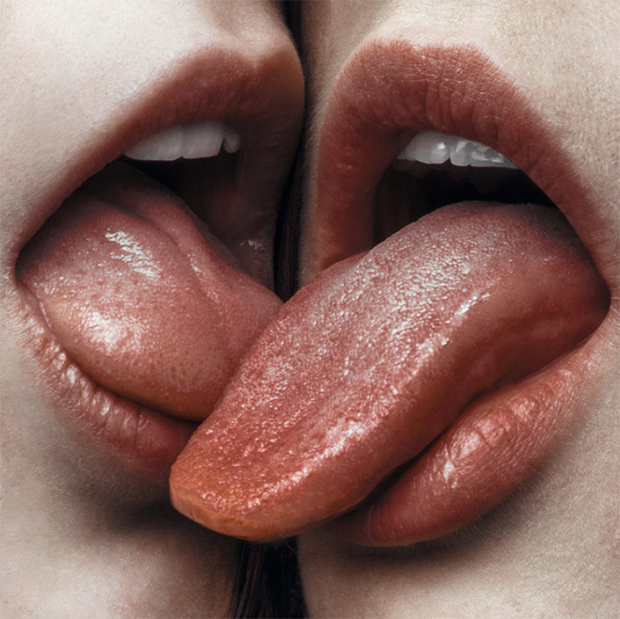
Nastia Cloutier-Ignatiev is a 19yr old portrait/fashion/beauty photographer based in Montreal, Quebec. She is currently attending the Dawson College DEC Professional Photography Program. Her series "Love" is the third of "Close-Ups" for C-Heads Magazine. She tries to capture the intimate moments between people in love, and refer's to their "bubble". 
She chooses to zoom in close, to really capture the bumps and gritty details to enforce the idea of intimate distance. She herself needed to be a certain distance away from her subjects in order for them to feel comfortable enough to open up to each other. Nastia would feel like as soon as her subjects gave into to the kiss, it was as if she wasn't there.
I like her choice to zoom in and make it minimal. No included the eye contact gives the impression of a "closed eye" kiss, which only deeps the connection between the 2 models. I think its very clever to capture moments most people have only felt, not seen.
In the comments someone accuses her of copying; their reference link: http://agonistica.com/snog-by-rankin/

Jade P. Post 5

3cm (Yung Chen Lin)

Screen-Shot-2016-04-07-at-10.41.11-AMScreen-Shot-2016-04-07-at-10.41.11-AMScreen-Shot-2016-04-07-at-10.41.11-AMScreen-Shot-2016-04-07-at-10.42.24-AMImage result for 3cm photographyImage result for 3cm photographyImage result for 3cm photographyImage result for 3cm photography

Yung Chen Lin is a Taiwanese photographer that goes by "3cm". These pictures are from his series titled "Red String". This series captures manipulations of the female form while conveying themes of sexuality, morality, and religion. He doesn't include facial expression, making it possible for the viewer to insert his/her emotions into the scene. 
3cm has a minimal, surrealist style. He like to be very indirect with his meaning/intentions but has stated that sometimes it comes off too direct or too abstract. His main influence comes from poetry and is very attracted to the subtleties it provides.
 I enjoy that his work looks effortless but is also powerful. He deals with current social issues women face by using the female form and making the viewer feel the pain within that form.

Olga Morozova - Artist Post # 7


1) The artist's name is Richard Higginbottom, he lives and works in Cheshire, UK. The pictures that I have chosen belong to his sequence called Vivarium. He shoots with a medium format camera and, very rarely now, large format. Higginbottom always uses the same speed and brand of film for the aesthetic and over time he developed an awareness of its intricacies.He likes the quality and detail that can be achieved with a large negative.

2) Higginbottom enjoys photographing his surroundings and finds inspiration in books, cinema and also his family and friends. The main influence on his photographs he receives from his surroundings. The artist seeks environments that are new to him and could offer him an opportunity for exploration. Speaking about his work in general, he wants the viewers to think about what is going on underneath the surface, by engaging in a process of interpretation. He also mentions that he wants to generate different kind of feelings in a viewer so they could take away something positive from his works.

3) We tend to choose artistic works that we like because it is what draws our attention. In fact, it is much easier to describe something that generates emotions. As I was challenged to describe a work that I don't like I chose Vivarium of Richard Higginbottom. When I see this particular sequence (although I looked for other photographs of this artist and didn't find anything I might possibly like) they all look the same to me. They don't generate emotions in me. Only the question: "what is it about?" I was looking for some kind of explanation; what might those objects found or placed in the middle of the forest mean. However I couldn't find a satisfying explanation. Maybe we could find the answer in its name "Vivarium" which translates from Latin as an enclosed area for keeping and raising animals or plants for observation or research. Although we see different objects in some pictures those are landscapes. Normally landscape photographers try to present us a pleasant, beautiful almost perfect picture of nature. Maybe this artist is trying to show us the reality, how the real forest looks like without Photoshop full of human traces. Maybe Vivarium is a study of the influence that people exert on nature, maybe there is some kind of idea behind it that would make these works look at least a little bit interesting to my eyes. Unfortunately, I couldn't find out, but I hope it has a meaning, otherwise it is boring and has no artistic meaning to it.
Monday, September 26, 2016

Callie Ward Artist Post 8


1. Robert Capa is the photographer who shot these photos above from WW2. He took these and every other photo he got in black and white. His intentions were to capture the moments that men had to face during war. He wanted to show action and reality to people who did not know what war had looked like. His most famous work shown was D-Day.
2. He had a theme in every picture like showing reality from every solders emotion and expressions. Their expressions and actions really showed what war was really like. Some of Roberts pictures were blurry but that gave a sense of action. Robert was moving all around to capture the best moments and views on every detailed situation.
3. I think Robert definitely showed what war all about and what men had to go through at the time. When pictures are captured in black and white it shows more emotion to me. After viewing all his photos from the war, it looked very sad and intense. Some were very blurry which to me meant it was a hectic situation and Robert had to capture it fast.

Kerry Goodman Post #7

Peter Edel


1. Peter Edel is a journalist for a Turkish Newspaper. During a time he spent two years at the Salt Lakes. During his time there Edel captured these photographs that are oddly appealing for a almost desert like landscape. Unintentionally Edel captured the beauty and vastness of nature itself.

2. With a very minimalist style he captured the terrain of the Salt Lakes. All of his photos shoot off into the distance showing just how expansive the terrain is. Edel never aimed for artistic merrits on his photographs, but they tend to hold a very artsy style that most photographers lack. Instead of filling up the image with nature he only gives it half the image size, while the rest throws you to the spacious area.

3. I find his photographs very awww inspiring to look at. The plains that he takes on really capture the beauty of nature, while at the same time, reminding you how vast the planet we live on really is. How landscapes can go on forever and it can seem almost endless. Edel captured some much attention with such little detail. Edel proved that minimalist photos can be just as appealing as vibrant and occupied photographs.

Julius Ayo Post 3 Artist 3

Mustafah Abdulaziz


1. Muztafah Abdulaziz shows off with his pictures from his project "Water." His pictures framed in a way that showcases not only as a problem for one person but as a whole. There is some realism in his pictures that he could convey perfectly. Some shots are aerial to show the vastness of the subject and some are focused on faces. The color gives off this cinematic feel to them, but at the same realistic enough to know that these pictures were taken in a way they weren't constructed or fabricated.

2. Abdulaziz's project "Water" showcases the water crisis around the world in mostly third world crisis. In most photos, you see people and their struggle to get access to clean water and or even find sources for it in the first place. In some photos, you the subject looking onto the horizon in search of solutions. 

3. I, too, came from a third world country and I know the struggle of finding clean water, or finding sources at all. But now that I live here in the US, it now even more clear to me how big of a problem this is around the world. The privilege I have to have access to water for bathing, drinking, cooking, is gone an incomparable to these people in the photos. It has opened my eyes to something I have taken granted for a long time.

Virginia Goode Artist Post 7


Dina Litovsky’s pictures study social interactions in public and private places. In the Meatpacking series the photos appear to be staged but they’re not staged at all.  In this specific sequence of images, it shows the excitement of night life. Being a young college student myself, it’s a very familiar scene.  


I think Litovsky is trying to show us how different things are at night time. That none of the socially acceptable rules applied to daytime, aren’t applied to the night scene. Litovsky is also showing us how the Meatpacking Industry has a history of being a “sexual playground.” These pictures basically show us how the freaks come out at night.


I like the fact that her pictures aren’t staged even though the colors and liveness make them appear like staged photographs. The color is what mainly draws me in but also the accuracy of the behavior in the scenes themselves.