Sunday, March 1, 2015

Weekly Artist Post - Lucas Suarez


1. Corey Arnold is a photographer and commercial fisherman. In his series, Fish Work, Arnold takes photographs of his time in the Bering Sea. For the photos shot outdoors, Arnold increased his shutter speed and aperture to capture his surroundings. With a high shutter speed, Arnold is able to include a sharp image of the ocean waves and sea spay against the boat. With a high aperture, Arnold is able to bring in more light to his photographs. Arnold also must of had between a 100-200 ISO so that his images would be clear and colorful. The orange buoys and clothing stand out in his images.

2. The intent for Arnold's series is to show the viewer what being at sea in Alaska is like. With frigid temperatures, constantly swaying on the boat, and birds flying around the boat, Arnold is able to create a clear image for the viewer. Arnold most likely used a wide angle lens to capture the entire surroundings of the boat. It creates a sense of isolation on the boat, as you are out at sea and there is no sight of land anywhere. Especially when you think about being at sea in Alaska and notice the snow, ice, and water that are constantly being thrown at the fishermen.

3. I really admire Arnold's photographs because of they involve lots of motion. With the constant swaying of the boat, being hit by waves, and capturing the spray of the waves is very sharp. It is even more amazing to think about how still Arnold had to be holding his camera in order to get a sharp clear image.  

Epiphani Kennedy Weekly Post


Katrin Koenning photographed teen moms with their children or handling motherly duties. Some lying down, holding their children, and others resting their heads. The mother holding her child is centered in the middle of the photo. And in the other two photos the women are centered but at the bottom of the photo. 
 
Katrin Koenning placed these women in the center and bottom center of the photo to show us what to focus on. In the second photo the mothers head is down but a photo of what looks like her child is on the wall in the background. From the second photo I can also tell that the mother is tired possibly from doing it all, being "SUPER MOM", and she just finally gets to rest for a second. In the last photo the mother is lying with the child while he is sleeping. She also looks to have just finally have gotten a break.

I chose these photos and this artist because I enjoyed the realness of these photos. These photos are of young mothers in real life motion doing their motherly duties. I can only image how hard it is being a young mother having to maintain a home and a child and possibly doing it alone. I understand the feeling of finally getting to take a break or a quick rest.

Monica Fowlkes - Weekly Artist Post


For Dress Rehearsal, Massachusetts-based photographer Blake Fitch invites girls to play dress-up, quietly observing that time in a young woman’s life when she becomes enamored with the idea of princesses and make-believe adventures. Contacting family members and friends with children, as well as approaching the parents of girls she encountered out in the world, she photographed the young princesses in their favorite Disney costumes as they romped about the New England landscape.

Fitch became concerned with princesses in relation to her own four-year-old daughter, who is now facing a media frenzy often referred to as Princess Culture, a sensation by which young girls have been taught to idolize the heavily-marketed Disney characters. In directing her gaze at the girls themselves, Fitch takes the time to genuinely listen, to question the role of princess culture without projecting any preconceptions about the phenomenon in relation to gender roles and femininity. Hoping to capture the girls as individuals rather than archetypal females, she encouraged them to incorporate their personal belongings. She set each shoot in the outdoors to find moments of exploration and courage removed from the confines of the home or domicile where female characters are too often confined.

I really liked the role the photographer uses the little girls and the role of princesses in a young girls life. Where some mothers and academics insist that the princess phase is simply a normal part of growing up, others argue that Disney princesses and similar characters place a damaging emphasis on physical beauty, conformity, and docility as key elements of a feminine identity.

Brianna Ivey-Weekly Artist Post 8

Randy Harris 


1. With the majority of the east coast covered with snow, Randy Harris show use through his pictures of vegetation that the cold and the snow will go away and the spring and the sun shine will be here in a few weeks. In early March, farmers will be able to plant their first crops such as tomatoes, kale and etc.

2.New York based food and travel photograph, Randy Harris"Spring is Coming(Eventually)" he captures the vegetables shapes, colors, aromas that comes with gardening in the springtime. He turns the garden vegetables in to a work of art.

3. I chosen Randy Harris pictures because I am tired of the cold weather and is hoping and praying that Spring and Summer will be here soon. Harris captures the vegetables beautifully that you do not hardly see when you go to the grocery store and farmer's market. Even if you are not a big fan of vegetables. I believe that even Harris pictures will make even the pickiest eater want to eat vegetables.

Shane Ambrose Weekly Artist Post


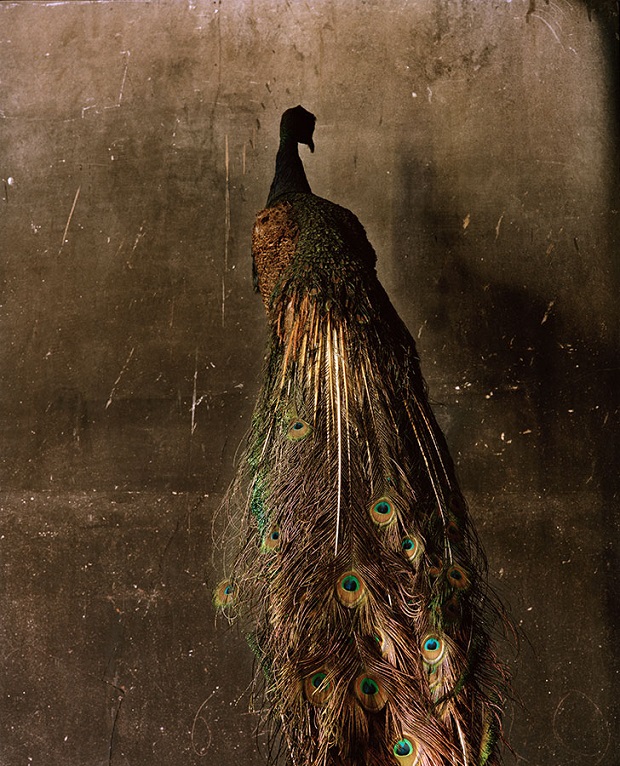
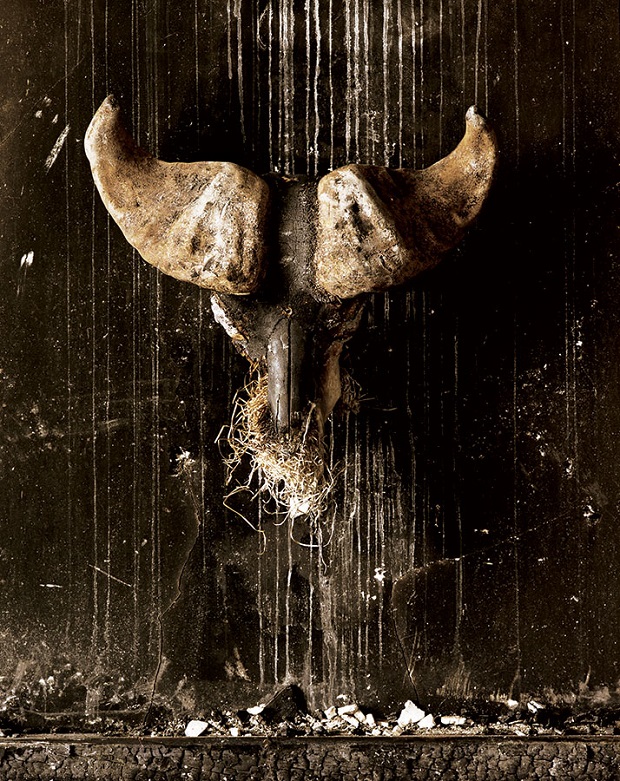
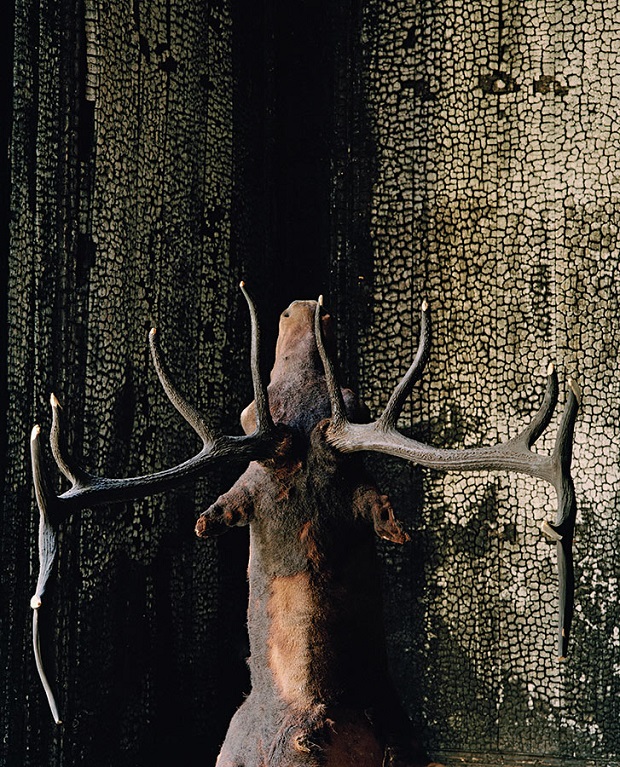
In these photographs, Marc Dantan portrays the aftermath of a devastating fire at a taxidermy museum in Paris.  He has created very stark images with his use of light and color.  There is a great sense of contrast in them conveying crisp details of the animals as well as the background.  I find the backgrounds to be particularly interesting with the differing linear qualities displayed.  Compositionally, he balances the portraits with strong symmetry in terms of the shapes, as well as equally balancing the light using contrast on either side.

I think the message of these pieces is to convey the sense of darkness and sorrow that exists in the museum since having burned down.  The photographs look to focus on the charred surfaces and rigidity of the remains on the walls and especially on the animals.

I personally think that Dantan has achieved his goal of portraying the gloomy nature and charred aftermath of the fire.  The dark lighting accentuates the crackled walls and the imperfections of the animals that came as a result of the fire.  He also does a great job of bringing a sense of longing into the photographs (as the museum remains in the state, and has been for close to 7 years) especially within the first image of the peacock facing the other way with his head shadowed.  I can feel the sense of loneliness in the museum.


Laura Austin- Weekly Artist

Randy Harris


1. In each of these three pictures, Randy is focusing on the foreground or middle ground, and letting the background blur. In most of the pictures, it appears as though the main subject isn't as clear in quality as it could be. Perhaps he did this on purpose. He could have decided to have the ISO set to a higher number. An obvious decision he did make was about the content of his pictures. In these three pictures, the subject is contrasting in color with it's surrounding. In two of the three pictures, the main subject is red and surrounding it are greens vines and plants. In the other picture, of the leaf, the whole subject itself has red and green in it.

2. I think Randy's purpose for these pictures is just to show us beautiful color in nature. These pictures show us how vibrant and colorful vegetables can be. In the picture of the leaf, he chooses to use a long focal length to show us micro images of a leaf. Most people would not be able to see that a leaf's veins are red. It also shows tiny bug bites out of the leaf. 

3. I enjoy the vibrant colors of these pictures, that's what drew me to them. I like that he shows us the raw quality of nature. In a way, it shows the growth of these plants. My favorite of these three is the photo of the leaf. I'm not sure what kind of leaf this is but that doesn't matter. I like that he shows us the extreme detail of the veins and the small holes from feeding. The thing I like most that he showed us of this leaf is the contrasting color within itself.

Breotnie Nichols - Weekly Artist Post

Kentaro Takahashi


1) I believe that Kentaro Takahashi utilized a wide aperture in order to achieve the shallow depth of field that is prominent in his photos. Additionally, he would have used a lower ISO because most of his photos for The Riverbed were taken outside. Due to the fact that he is mostly taking pictures of individuals, his shutter speed would have to be above 1/60. I think that he primarily used a longer focal lens because the pictures are narrow and there is not a lot of background present. I assume that he also used manual focus so his subjects could be further separated from the background.

2) Kentaro Takahashi is a Japanese photographer. He lived through the disastrous 2011 earthquake, which gave him a new outlook on life. As a result, he decided to become a photographer and set out to record his life. This series, The Riverbed, was inspired by Kamo no Chomei's "My Ten-Foot Hut". In this essay Kamo no Chomei writes "the flowing river never stops and yet the water never stays the same", which is a metaphor for the uncertainty of life. In this series Kentaro photographs the lives of the people along the Tama River, which is Kentaro considers to be an important motif in Japanese history as it appears in many artists' works. Ultimately, Kentaro desires to answer the question "how to confront the crisis we are facing now?" The crisis he is referring to is that Japanese citizens are not taking an interest in politic, which is a cultural problem. The idea from the past "you should not speak about religion or politics in public" is still being followed today. Kentaro's photo project is his attempt of connecting with these past ideologies in order to find an answer to this question. He does so by taking pictures of individuals, or objects, along the river that represent the "typical ideas"  of Japan.

3) I find this project very interesting as it reflects the collectivist culture of Japan. His photos are not focused on the individual, but on how the individual represents the Japanese culture overall. I am forced to look at these photos in a different way. Before I read his interview, I was looking at the photos through a Western lens. However, I have gained a newfound appreciation for the project now that I have switched my outlook. His photos are captivating.  There is an ominous aspect to them, as if they are foreshadowing the future of Japan. I am interested to see where he goes with this project, as he has stated that he is still in the middle of his research.