Saturday, March 28, 2015

Monica Fowlkes - Weekly Artist Post


Greasy food and scantily clad women – together at last. Just when you thought you’d seen it all, Australian photographer Sarah Bahbah emerges on Tumblr and Instagram with her provocative series, aptly titled, Sex and Takeout.

The suggestive series takes the idea of ‘food porn,’ that is, the glorification of food, quite literally. Here, Bahbah unites sex and food in an enticing and highly suggestive way. From couples frolicking in a bed of cheeseburgers to fast-food wrappers covering up private parts, Bahbah and her camera lens have witnessed some pretty peculiar fetishes.


Theses pictuers and are really out of the ordinary. Some might read into the series as a comment on the idealization or objectification of women or perhaps the gluttony of Westerners in a fast-food culture. I propose we take the images for what they are: unexpected portraits of beautiful people that leave you wanting more.

Friday, March 27, 2015

Holli Turner - Weekly Artist Post


In these photographs you have people and animals more specifically cats.  The people have more of an ability to follow directions and sit still however the pets do not.  Due to this I believe that the photographer used a fast shutter speed between 1/250 of a second or 1/1000 of a second.  The artist also made great use of light and color in the images. You can see that color placement was very intentional.  Some items looked like they were even purchased to go along with the theme of the photo.


Andreanne Lupien’s concept was to add to the climbing increase in the already popular topic of cats.  She wanted to show cats with their owners in their most comfortable surroundings and their interactions with each other.


I enjoyed viewing these photographs and thought them to be a unique take on pet and owner portraits.  I have one cat an orange tabby named Tiger and couldn’t imagine having more than one at a time.  This isn’t your regular “old cat lady” which alters that stereotypical perspective that usually associates one with the other.  Since our class started getting into this photoshop and this ‘Crazy Cat Lovers’ project makes use of photoshop by multiplying the number of cats over the area of the photo.  All of these cats are not all doing all of these different things in one shot.


Sabrina Brooks- Weekly Artist Post


            With her talent for creating the all things comically bizarre, Yumiko Utsu does not just take pictures she makes them. She uses such a shallow depth of field that it appears as if she is using a scanner. However, the verification that she used a camera is evident in her thoughtfully arranged compositions of miniature figurines and out-of-the-water animals.  Utsu’s attention to craft when she is building her files is extraordinary as well. Being sure to draw subtle attention to the bizarre colors of the squids in comparison to the iconic pieces beneath them is an exceptional feat. Her pieces were designed to be weird but overbearingly so.
            This technique compliments her style of wanting to transform what she feels to be boring or mundane into something unnatural and oddly appealing.  There also seems to be a relation to her wanting to take aquatic creatures native to Japan and add them to that piece. It is almost as if Utsu wishes to transform these European images and sculptures into Japanese delicacies. In a since, through her bizarre surrealism, she wants to personalize these famous works with a very unique, tentacle signature.

            Utsu makes me question creating surreal images. This artist makes me want to try what she is doing with my own prints rather than pre-existing artworks. I like her over-the-top style and exaggerated contrast. Yumiko Utsu shows me that I can create my own world here in the now using aspects from the past.

Wednesday, March 25, 2015

Jennifer Maddox- weekly post

Dark Cyanide


What are the artist's technical choices?
In the photos above he used a slow shutter speed to catch the movement of the city below him. Also, you can tell on the last photo that he waited there for the right moment when the sunset hit the buildings. I believe he also used a deep depth of field to capture all the buildings and lights in focus which means he also had a tripod for these photos.

What are the artist's conceptual and/or thematic intents?
I chose these photos from his album titled Rooftops.  I believe he wanted to display a view of New York City that many people have not seen. Either from the ledge of a skyscraper to just looking out over the city. He wanted to show the movement and life in the city even after the sun goes down and how beautiful it can be. 

How do you respond to these choices and intents?
I am not one to find the city very beautiful but he has accomplished that in my mind. The way the lights of the buildings are taken look almost serreal and the reflect of the sunset off of the buildings is just amazing. His choices for keep a long shutter speed instead of a fast one really helped bring his photos to life.

Grace Herion - weekly artist post

Dina Goldstein


Dina Goldstein uses long sense and zero-ed out exposure to create these images. The scenes are posed and constructed, so everything about the image is very deliberate. Because of the stiffness of the image and subject, Goldstein uses light to emphasize the focus of the image.

Goldstein is a world renowned commercial photographer. In this shoot, she tells the story of a modern marriage between "plastic" people who struggle with their true identities. The focus is on "K"'s (the husband) struggle with his sexuality.

I appreciate the message Goldstein is trying to convey in her photos, and the story is interesting to see progress. It is certainly what I would traditionally think of for a photographer, but perhaps this is a good example of the different between a commercial photographer and non-commercial (whatever the word for that would be...)

Tuesday, March 24, 2015

Weekly Artist Post- Shane Ambrose


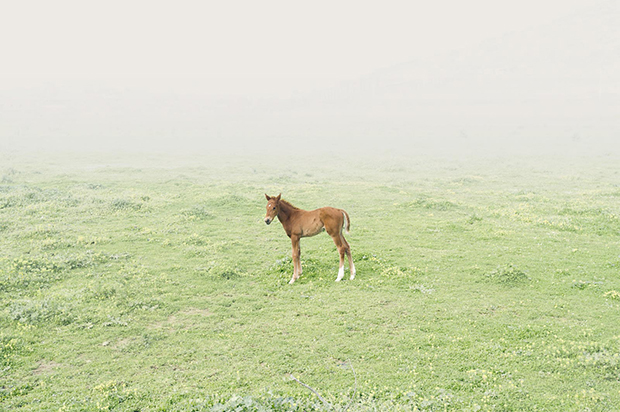
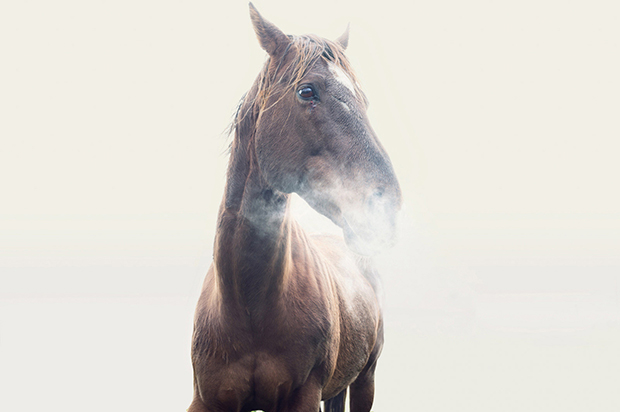
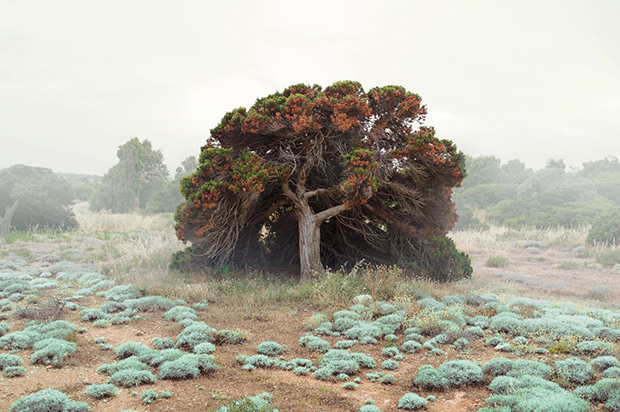
In these photographs Petros Koublis displays his uncanny ability to materialize the wonders of the natural world with such beautiful colors and use of light.  The light green of the grass in the first picture ominously fading into the fog above the horizon line with the single brown horse centered in the frame stirs up a certain mystery about its presence.  The use of fog in the two other pictures is incredible as well.  Again he uses somewhat symmetrical compositions with great contrast, with the horse against the fog, as well as the tree and the beautiful Tiffany colored plants inhabiting the foreground juxtaposed with the darkness of the centerpiece tree.

Koublis has created these pictures with the purpose of conveying the ethereal existence of the natural world, and our connection to it through the animals he has photographed.  He uses the fog as a symbol of the mystery of the spiritual world, which gives the viewer of feeling of there being something more behind the haze.

I find these photographs to be particularly brilliant in the approach as well as the execution.  To put it bluntly, Koublis fucking killed it..  His ability to capture the omnipresence of the fog and using it as a fulcrum to balance the natural world with the ethereal is (excuse the pun) unreal.  It's hard for me to believe that these photos are not enhanced dramatically, which speaks to the artistic acumen of Koublis.

Keri Wodard - Weekly Artist Post

RAYMOND DEPARDON


Raymond began taking pictures on his parents farm when he was only 12 years old and claims to be mostly a self-taught photographer. Depardon is also a film maker and has received many awards such as the Pulitzer prize winning photo journalist award. Throughout the years this photographer spent a majority of his time traveling with his camera which isn't specifically mentioned. While traveling he covered many important pieces of time like the Civil War, the fall of the berlin wall, and even more recent times of Afghanistan.
 
This photographer uses great sensitivity to approach us with harsh realities of real life. This photographer is using less serious subjects while still having intense backgrounds that tell a bigger story. The use of white and black really plays a big part too because it feels more natural when older pictures, or pictures from history, are grainy and only two toned. Depardon captures landscapes, portaits, nature, and events throughout history.
 
Without much information on Raymond Depardon's technical choices or even personal choices, I believe that these pictures have meaning and are taken with a purpose. Unlike many of the photographers that I have looked at, Raymond uses the clouds and the sky in a good amount of his photographs. The photos seem well-balanced and great quality (especially for the time difference and the rate of technology). I really enjoyed these photographs mainly for the lighting and the the sort of vague subject matter (not focused on too much of the same subject).
 
 
http://www.magnumphotos.com/C.aspx?VP3=CMS3&VF=MAGO31_10_VForm&ERID=24KL535T16